About

The work came before the research.

The questions explored throughout this site did not originate in a laboratory or academic department. They emerged through operational experience, instruction, evaluation, and years spent observing how people supervise complex systems under uncertainty.

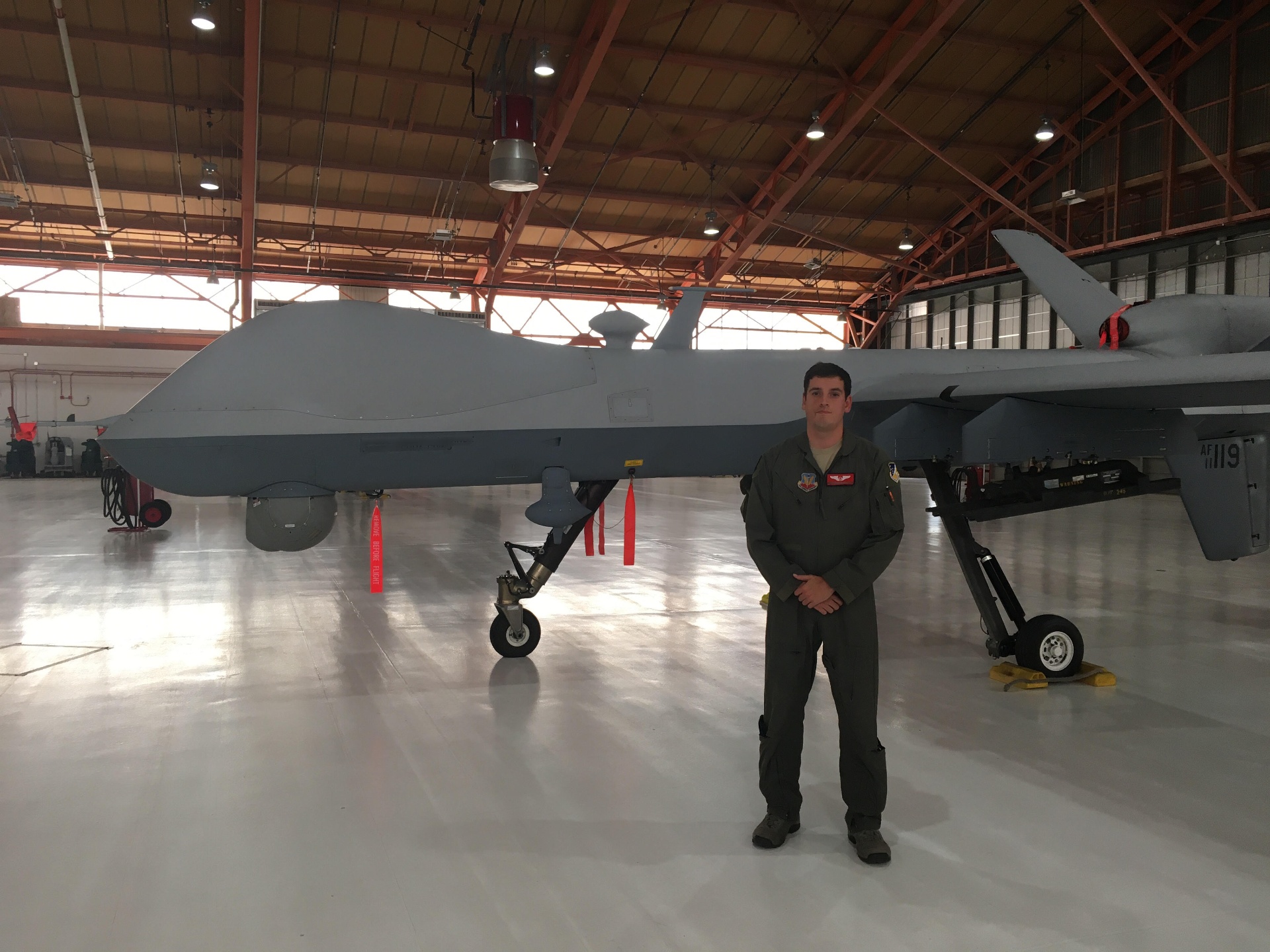
Tanner Yackley standing in front of an MQ-9 Reaper in a hangar.
Former USAF MQ-9 Instructor & Evaluator
Narrative

How the program developed.

CH.01Section 1Milestone
Primary chapter

The Ground Control Station

The work began in a Ground Control Station: long-duration remote missions, decision-making under uncertainty, and the steady experience of supervising complex systems across distance and time.

What stood out, over years of orbits and shifts, was how rarely the technology was the actual limiting factor. The aircraft was capable. The sensors were capable. The networks were capable. The constraint was almost always human: attention, fatigue, the cost of rebuilding a usable picture after every interruption, and the quiet judgment required to act on partial information.

Those observations were not framed as research at the time. They were just the questions that would not leave the seat at the end of the shift.
CH.02Section 2Milestone
Primary chapter

From Operator to Evaluator

The transition into instruction, evaluation, and standardization changed the angle of view. From the evaluator's seat, the same crews could be watched succeeding and failing across many sorties, and the differences between novice and expert performance became something to be studied rather than felt.

Crew coordination, context sharing, prioritization, and supervisory judgment turned out to vary far more than any technical checklist could capture. A crew could be technically proficient and still operate with a shrinking margin for the unusual situation; another crew could be average on the checklist and consistently make the better call.

What expertise actually depended on was often difficult to measure with the tools available. That gap, between what could be evaluated and what mattered, became one of the durable questions behind the current research program.

CH.03Section 3
Supporting chapter

Industry and the Human Problem

Work as a General Atomics Evaluator extended the same observations into a different setting: evaluating operators, watching human–machine interaction at close range, and studying the training systems, readiness practices, and operational performance that surrounded the aircraft.

The platforms had advanced. The interfaces had advanced. The training had advanced. The human challenges had not changed. Crews still paid context cost across every handoff. Operators still had to supervise systems whose behavior was sometimes opaque. Decisions still had to be made under time pressure with incomplete information.

It became clearer that the human side of remote operations was not a problem that more technology, by itself, was going to solve.

CH.04Section 4
Supporting chapter

The Classroom

Teaching future operators in a university setting forced a different kind of clarity. Translating operational experience into curriculum required naming things that had only been felt before: attention behavior under load, what supervisory quality actually meant, how authority should move when fidelity shifted.

Connecting practice and theory exposed gaps in the existing frameworks. Some concepts that worked well in the literature did not survive contact with operational reality. Some operational realities did not yet have language in the literature at all.

The classroom did not generate the questions, but it sharpened them, and made it harder to leave them unaddressed.

CH.05Section 5Milestone
Primary chapter

Remote Warrior

Remote Warrior was created because practitioner knowledge in this domain was disappearing. Crews accumulated hard-won understanding across thousands of hours and then carried it out the door at the end of a career, with nowhere for it to be deposited and very little public recognition that it existed.

The effort exists to preserve that knowledge, to make remote operators more visible to the institutions that depend on them, and to create a place where operational experience can accumulate over time. It also exists to support the crews and families who carry the long arc of this work.

It is, first, a knowledge effort. The community is the mechanism; the practitioner record is the point.

CH.06Section 6Milestone
Primary chapter

The Research Program

The current research agenda emerged from the through-line of the previous chapters. Human Performance in Remote Warfare is the umbrella problem: the operational, cognitive, and psychological demands of conducting warfare from a Ground Control Station across months and years.

Context Reconstruction Cost, Supervisory Control Quality, Authority Migration, and Irreversibility & Prioritization are the supporting perspectives. They are not independent topics; they are the angles from which the umbrella problem is being worked.

Each one came out of a specific operational observation that would not resolve itself, and each is now being developed into a line of writing and applied work on the Research and Publications pages.

CH.07Section 7
Supporting chapter

Why this work stayed with me.

Over time it became difficult to ignore a pattern.

Operators carried experiences that often remained invisible outside their communities. Important lessons were learned, but rarely preserved. Questions about attention, supervision, responsibility, and consequence continued long after missions ended.

Some of those questions affected people I served with. Some affected me personally. Most were larger than any one individual.

The work continues because the questions remain unresolved.

CH.08Section 8
Supporting chapter

Current Focus

Active work is concentrated in a small number of lines: the research program described above, ongoing writing across essays and field notes, the continued development of Remote Warrior, the Public Safety UAS Readiness Assessment, the practitioner interview series, and the broader study of human performance in remote and increasingly autonomous operations.

Everything currently on the site traces back to one of those lines.

The Human Side

The work does not end at the squadron door.

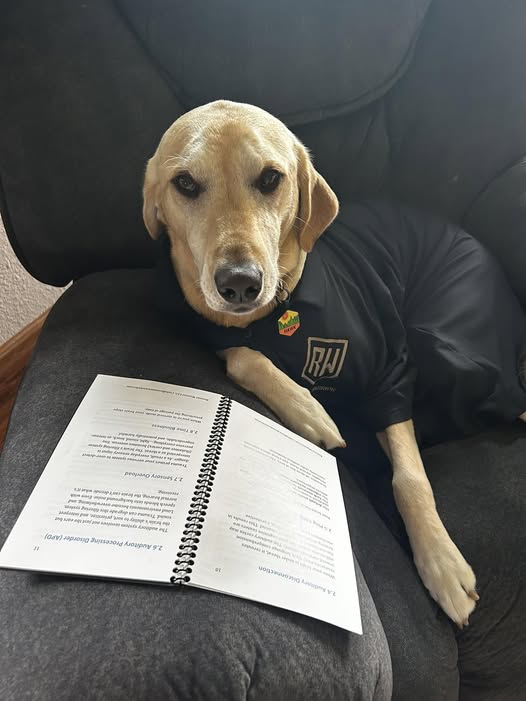
Hawk, a yellow Labrador, resting quietly during a working session.
Hawk. Service dog, daily companion, and quiet participant in much of the work behind this site.

Not every part of the work happens in a classroom, conference, or Ground Control Station.

Reading, writing, reflection, and the slow preservation of practitioner knowledge happen elsewhere, and they happen with company.

Closing

The aircraft was never the limiting factor.

The systems improved. The sensors improved. The networks improved.

The questions that remained were human.

  • How people supervise.
  • How they understand.
  • How they maintain context.
  • How they make decisions when consequences cannot be undone.

This work is an effort to better understand those questions.